Notas de video conferencia para estudiantes de medicina | HoverNotes
Course Platforms14 de diciembre de 2025•Updated: 16 de julio de 2026
Notas de video conferencia para estudiantes de medicina
Descubre poderosos consejos de estudio para estudiantes de medicina que te ayudarán a dominar las clases en video, mejorar la retención para exámenes como el USMLE y crear un sistema de aprendizaje sostenible.
Por HoverNotes Team•18 min de lectura
La parte más difícil de la facultad de medicina no es la dificultad del material. Es el puro volumen. Tu prioridad número uno es construir un marco que pueda manejar el torrente de información sin desgastarte.
Esta guía se centra en uno de los mayores consumidores de tiempo: convertir horas de conferencias en video — desde tutoriales de anatomía hasta sesiones grabadas de patología — en conocimientos que realmente puedas usar.
#Construyendo una rutina de estudio sostenible para la facultad de medicina
La piedra angular del éxito en la facultad de medicina es un horario de estudio constante e inteligente. Olvídate del mito de la noche en vela. Los estudiantes de alto rendimiento se enfocan en la eficiencia y la sostenibilidad, no en la fuerza bruta.
Tu objetivo es simple: crear una estructura predecible que convierta conceptos complejos en conocimiento a largo plazo, un día a la vez.
En general, los estudiantes preclínicos de alto rendimiento comparten un rasgo: registran 6-8 horas efectivas de estudio por día. Observa la palabra "efectivas"—no se trata solo de tiempo con el libro abierto. Es una actividad enfocada y de alto rendimiento.
Este refuerzo inmediato es un cambio radical. Detiene la curva del olvido y hace que cada sesión futura de repaso sea exponencialmente más productiva.
Tu espacio físico importa tanto como tu horario. Minimizar las distracciones es una palanca simple pero poderosa que se relaciona directamente con mejores puntajes.
Encuentra tu santuario—una esquina tranquila en la biblioteca, un escritorio dedicado en casa, donde sea que puedas trabajar sin interrupciones. Esto no es negociable.
La clave no es encontrar más horas en el día, sino hacer que las horas que tienes cuenten. Un ambiente sin distracciones y una rutina sólida pueden fácilmente doblar la efectividad de tu tiempo de estudio.
Un horario ganador va más allá del aprendizaje pasivo. Intencionalmente reserva tiempo para el compromiso activo—revisar apuntes, resolver preguntas prácticas y usar tus tarjetas de repetición espaciada.
Un horario bien diseñado es tu plano para generar impulso sin llegar al agotamiento. Reconoce la realidad de la educación médica: la comprensión se construye capa por capa, día a día.
Para ver cómo se ve esto en la práctica, aquí tienes una comparación entre un horario de alto rendimiento y uno común, menos efectivo.
#Plantilla de bloque de estudio diario para estudiantes preclínicos
Bloque de Tiempo
Actividad de Alto Rendimiento (Top Performers)
Trampa Común (Rendimiento Promedio)
Mañana
Asistir a clases presenciales o verlas a velocidad 1.5-2x, anotando notas en una primera pasada.
Ver clases pasivamente, planeando "volver a ver más tarde."
Tarde
Repaso el mismo día: Convertir notas de clase en tarjetas Anki o hojas resumen.
Procrastinar el repaso, dejando que la curva del olvido actúe.
Tarde-Noche
Bloque de práctica: Resolver un conjunto de preguntas relevantes (UWorld, Amboss).
Pasar tiempo releyendo libros o viendo las clases de nuevo.
Noche
Repetición espaciada: Completar las revisiones diarias en Anki. Planear el horario del día siguiente.
Hacer Anki "cuando tenga tiempo," saltándose días a menudo.
Relajación
Tiempo protegido para hobbies, ejercicio o socializar. Hora límite estricta.
Estudiar hasta tarde, sacrificando sueño y llegando al agotamiento.
Esto no se trata de ser un robot; se trata de ser intencional. Un día estructurado protege tu tiempo, fuerza el aprendizaje activo y, lo más importante, te evita quedarte atrás.
#Convertir conferencias en video en conocimiento usable
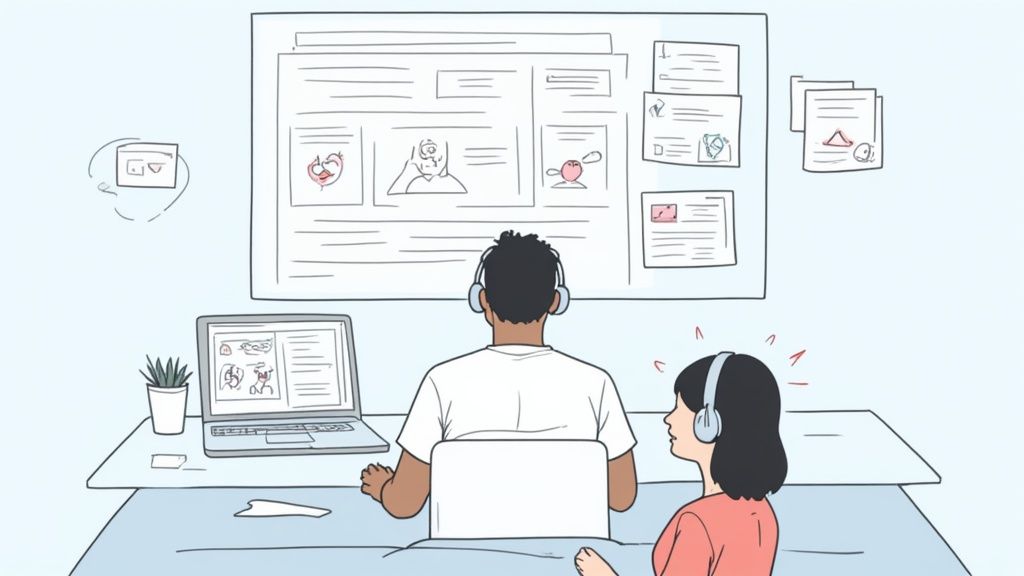
En la facultad de medicina, las conferencias en video son la base para aprender anatomía, patología y rutas bioquímicas. Pero ver un video no es lo mismo que aprender de él. La gente ve, pero no recuerda. El verdadero desafío es transformar horas de información visual densa en conocimientos que puedas recordar durante un examen.
Muchos estudiantes quedan atrapados en el ciclo de pausar, retroceder y tomar capturas de pantalla desorganizadas. Es un flujo de trabajo que destruye tu concentración. Peor aún, separa el contexto visual crucial — como una arteria destacada en un diagrama de anatomía — de las notas que deberían explicarla.
#Por qué el método manual para tomar notas de videos está roto
La forma tradicional de tomar notas de videos no funciona. Quedas atrapado con dos malas opciones: enfocarte en el video y obtener notas desordenadas, o enfocarte en tus notas y perderte lo que muestra la pantalla.
Cambio constante de contexto: Saltar entre el reproductor de video y la app de notas mata tu concentración.
Visuales dispersos: Las capturas de pantalla se acumulan en una carpeta aleatoria, desconectadas del texto que deberían ilustrar.
Gran pérdida de tiempo: Pausar y retroceder para captar un detalle específico fácilmente duplica el tiempo para terminar una sola conferencia.
Este proceso vuelve el aprendizaje en una tarea pesada y deja notas fragmentadas difíciles de repasar. Hay una manera mucho mejor.
Un enfoque más inteligente es automatizar el tedioso proceso de captura para poder centrar tu energía mental en entender el material. HoverNotes es una extensión Chrome que reproduce videos contigo, genera notas con IA y las guarda como archivos Markdown directamente en tu sistema. Funciona en cualquier sitio web con videos, desde portales universitarios hasta YouTube.
A diferencia de herramientas que solo analizan transcripciones, HoverNotes ve el video para captar lo que realmente está en pantalla. Esto significa que captura diagramas intrincados, imágenes radiológicas y textos en pantalla que las herramientas solo de transcripción no detectan.
Como estudiante de medicina, estás construyendo una base personal de conocimiento que representa años de trabajo intenso. La privacidad de estos materiales de estudio es fundamental.
Porque HoverNotes guarda todo como archivos locales Markdown (.md), tus notas permanecen privadas en tu propia máquina. Tú posees los archivos. Este enfoque local es perfecto para herramientas como Obsidian, permitiéndote construir una base de conocimiento permanente y buscable que no está atada a un servicio en la nube que no controlas. Tus notas te pertenecen.
Este cambio simple transforma la visualización pasiva en una sesión de aprendizaje activa. Si usas YouTube para material extra, consulta nuestra guía sobre cómo convertir videos YouTube en notas efectivas. El enfoque local garantiza que tu conocimiento ganado con esfuerzo realmente te pertenezca.
#Cómo usar eficazmente los bancos de preguntas para los exámenes
Los exámenes de licenciatura como el USMLE son un animal diferente. El éxito no consiste en memorizar hechos aislados; se trata de reconocer patrones clínicos. Esa habilidad se forja haciendo una cosa una y otra vez: resolver miles de preguntas prácticas.
Integrar bancos de preguntas como UWorld o Amboss en tu rutina desde el primer día es de las cosas más rentables que puedes hacer. Cambia tu aprendizaje de absorber información pasivamente a aplicarla activamente.
El error más grande que cometen los estudiantes es esperar hasta su período de estudio dedicado para abrir un banco de preguntas. Comienza a usarlos junto con tu curso desde el primer bloque.
Este enfoque “sistémico” afianza lo que aprendes en clase y construye el hábito crucial del análisis de preguntas temprano, antes de que la presión aumente.
Cuando empieces, usa modo tutor sin límite de tiempo. El objetivo no es la velocidad. Se trata de entender profundamente el "por qué" detrás de cada opción de respuesta, tanto correcta como incorrecta.
#El enfoque por fases para los bancos de preguntas
Tu estrategia de bancos de preguntas debería evolucionar conforme te acercas al examen. Piensa en esto como un maratón con fases distintas para construir conocimiento y resistencia mental.
Esta subida gradual evita que te satures y construye sistemáticamente la resistencia cognitiva necesaria para un día de examen de 8 horas.
Tus respuestas incorrectas son oro. Cada respuesta errónea es una luz roja intermitente que señala una brecha en tu conocimiento. No solo leas la explicación por encima; descubre el concepto central y entiende por qué caíste en la trampa.
Solo pasar preguntas es trabajo sin peso. El verdadero aprendizaje ocurre durante la revisión. Por cada pregunta que falles (o incluso una que adivinaste bien), necesitas un sistema para procesar ese error. Muchos estudiantes crean tarjetas o notas resumen rápidas basadas en el concepto clave que se les escapó.
Esta es la oportunidad perfecta para conectar tu práctica activa con tu base de conocimiento. Cuando una pregunta del banco detecta un área débil, puedes crear notas específicas para llenar esa brecha. Un sistema bien organizado te permite construir una guía de estudio personalizada y potente con el tiempo. Para facilitar este proceso, consulta nuestra guía para crear un generador de guías de estudio personalizadas.
En última instancia, volumen y consistencia ganan. Un estudio encontró que para el USMLE Step 1, completar al menos 7,000 preguntas prácticas correlacionaba con los puntajes medios más altos para graduados médicos internacionales. Los datos también mostraron una fuerte relación entre aprobar y dedicar 25-50 % del tiempo de estudio total a preguntas prácticas. Puedes leer más sobre los hallazgos del estudio sobre hábitos estudiantiles aquí.
No puedes retener toda la medicina en tu cabeza. No se trata de tener memoria perfecta; se trata de construir un sistema externo confiable. Los estudiantes efectivos no solo toman notas, sino que construyen una base personal de conocimiento, un "Segundo Cerebro" que crece con ellos desde el primer año hasta la residencia.
No se trata de crear carpetas ordenadas para tus diapositivas de clase. Se trata de crear una red de ideas interconectadas que refleje cómo funciona tu cerebro. Usando herramientas como Obsidian o Notion, puedes enlazar conceptos desde cardiología hasta fisiología renal, transformando notas dispersas en una red poderosa y buscable.
#Por qué el enfoque local-primero importa para los estudiantes de medicina
Tus notas son tu activo intelectual más valioso. Representan miles de horas de trabajo y contienen toda tu educación médica. Confiar solo en servicios en la nube es como alquilar un trastero para tu cerebro: si la empresa quiebra o cambia sus términos, podrías perder acceso.
Un enfoque local-primero te pone en control.
Privacidad: Tus notas permanecen en tu máquina. Sin accesos de terceros a materiales sensibles.
Propiedad: Los archivos son tuyos, para siempre. Puedes respaldarlos, moverlos y abrirlos con cualquier herramienta que lea texto plano.
Durabilidad: Tu base de conocimiento no está atada al modelo de negocio de ninguna empresa. Será igual de accesible dentro de diez años que hoy.
Cuando tomas notas localmente, tú posees los archivos. Muévelos, respáldalos, búscalos — son solo Markdown. Este es un principio crítico para construir un activo de conocimiento que dure toda una carrera.
#Un flujo de trabajo para procesar conferencias en video
Vamos a ponernos prácticos. ¿Cómo pasas una conferencia de patología de dos horas a tu base de conocimiento sin gastar tres horas más limpiando notas desordenadas?
Un flujo de trabajo optimizado es todo. La clave es automatizar la captura de información para que puedas enfocar tu energía limitada en sintetizarla. Por ejemplo, HoverNotes puede generar notas potentes con IA de cualquier conferencia en video y guardarlas directamente como archivos .md en tu computadora.
Estas no son solo transcripciones; incluyen capturas de pantalla con marcas de tiempo de diagramas y diapositivas importantes. Cada captura incluye un enlace con la marca de tiempo — un clic te lleva a ese momento exacto en el video. Puedes arrastrar este archivo directamente a tu bóveda Obsidian. Desde ahí, tu único trabajo es lo que vale la pena: enlazar términos clave. Conecta el mecanismo de acción de un fármaco a la vía renal que afecta, o enlaza una nueva enfermedad con una similar que estudiaste en el bloque anterior.
Este proceso transforma un documento estático de conferencia en un nodo dinámico de tu red de conocimiento en expansión. Construir este sistema es crucial, y puedes explorar diferentes enfoques en nuestra guía de software de gestión de conocimiento personal. Al enlazar ideas conforme las aprendes, haces que el recuerdo activo sea realmente efectivo. No solo memorizas datos aislados, entiendes las conexiones.
#Adoptando la mentalidad de los estudiantes de alto rendimiento
El éxito en la facultad de medicina tiene menos que ver con el genio innato y más con construir hábitos estratégicos. Los mejores no solo son más inteligentes; operan con una mentalidad que les permite manejar la presión y el volumen inmenso sin agotarse.
Todo empieza por admitir que no todos los hábitos de estudio son iguales. La investigación muestra que una fracción sorprendentemente pequeña de estudiantes realmente sigue rutinas efectivas.
Primero, conviértete en un observador crítico de tu propio proceso. ¿Tus técnicas de estudio actuales funcionan, o simplemente estás pasando por los movimientos? Una trampa común es confundir tiempo con el libro abierto con aprendizaje productivo.
Pregúntate a ti mismo regularmente:
¿Esto es recuerdo activo o estoy releyendo mis apuntes pasivamente otra vez?
¿Puedo explicar este concepto en voz alta sin mirar el libro?
¿Estoy siempre tratando de alcanzar el ritmo, o estoy revisando el mismo día?
Reconocer cuando una técnica no te funciona es una habilidad. Si tus notas no reflejan tu esfuerzo, no es señal de fracaso, es una señal para adaptar tu estrategia.
Los estudiantes de alto rendimiento no son inmunes a la procrastinación; solo tienen mejores sistemas para superarla. Cuando un tema es abrumador, lo dividen en tareas lo más pequeñas posible.
En vez de un objetivo vago como "estudiar cardiología," se ponen específicos: "revisar la vía de conducción cardíaca por 25 minutos." Este simple cambio vuelve una montaña en una serie de colinas pequeñas, generando impulso y reduciendo la fricción mental que lleva a procrastinar.
Y no olvides tu entorno. Un estudio con estudiantes de ciencias médicas reveló que solo el 11,2 % tenía hábitos de estudio “favorables,” y esos eran los mismos estudiantes con GPA significativamente más altos. El estudio también sugirió que quienes estudiaban en ambientes más tranquilos — como no vivir en dormitorios — tenían mejor desempeño, lo que subraya lo crítico que es controlar tu espacio de estudio. Puedes descubrir más insights de este estudio sobre hábitos estudiantiles.
Un rasgo clave de estudiantes exitosos es su disposición a abandonar una estrategia fallida. Tratan sus métodos de estudio como experimentos — si los datos (su desempeño) son malos, cambian las variables.
Finalmente, la mentalidad de un alto rendimiento considera el sueño como parte crítica del proceso de aprendizaje. Es durante el sueño que el cerebro consolida memorias, moviendo información de corto a largo plazo.
Sacrificar consistentemente el sueño para estudiar mucho de golpe es una de las cosas más contraproducentes que puedes hacer. Puedes sentir que haces más, pero la información simplemente no se fija. Proteger tu sueño es una decisión estratégica que rinde frutos en mejor retención y menos agotamiento.
Para estudiantes que usan plataformas con mucho video, aplicar estos principios mentales puede hacer una gran diferencia, como exploramos en nuestra guía sobre cómo aprender eficazmente de videos Udemy. Construir estos marcos mentales es la base para convertir largas horas de estudio en conocimiento duradero.
#Un plan semanal de estudio accionable para estudiantes de medicina
La teoría está bien, pero la ejecución es lo que separa a los mejores. Este es un plan tangible para una semana que reúne todas las estrategias que hemos cubierto en un solo horario que puedes empezar a usar hoy.
Si has tenido dificultades para convertir estos consejos en realidad diaria, esta es tu plantilla. Te muestra cómo encajar nuevas clases, repaso el mismo día, Anki y preguntas prácticas sin quemarte.
Entre semana, el objetivo es simple: asimilar material nuevo y comenzar inmediatamente a convertirlo en conocimiento duradero. Este ritmo previene los cram antes del examen asegurando que ningún tema quede atrás.
Un día típico entre semana podría verse así:
8 AM - 12 PM: Asistir a clases o ver las grabaciones a velocidad 1.5x. Tu único objetivo aquí es una comprensión en primera pasada.
12 PM - 1 PM: Almuerzo. Aléjate del escritorio. Tu cerebro necesita un descanso real.
1 PM - 4 PM: Este es tu bloque de repaso el mismo día. Es innegociable. Procesa las clases matutinas, convirtiendo tus notas desordenadas en tarjetas Anki limpias o hojas resumen concisas.
4 PM - 5 PM: Realiza tus revisiones diarias en Anki. Mantenerse al día con la repetición espaciada es crítico.
5 PM - 6 PM: Toma un descanso corto, ve al gimnasio o haz diligencias. Aléjate de los libros.
6 PM - 8 PM: Tiempo para un bloque de banco de preguntas. Resuelve preguntas prácticas relacionadas con los temas actuales. Dedica tanto tiempo a revisar explicaciones como a responder.
Después de las 8 PM: Tiempo personal protegido. Cierra los libros. Has terminado por hoy.
Los fines de semana no son solo para recuperarse; son para consolidar. Esta es tu oportunidad para conectar los puntos entre diferentes clases.
Un error clásico es usar todo el fin de semana solo para descansar. Los mejores estudiantes lo usan estratégicamente para adelantarse, haciendo que la próxima semana sea mucho más manejable.
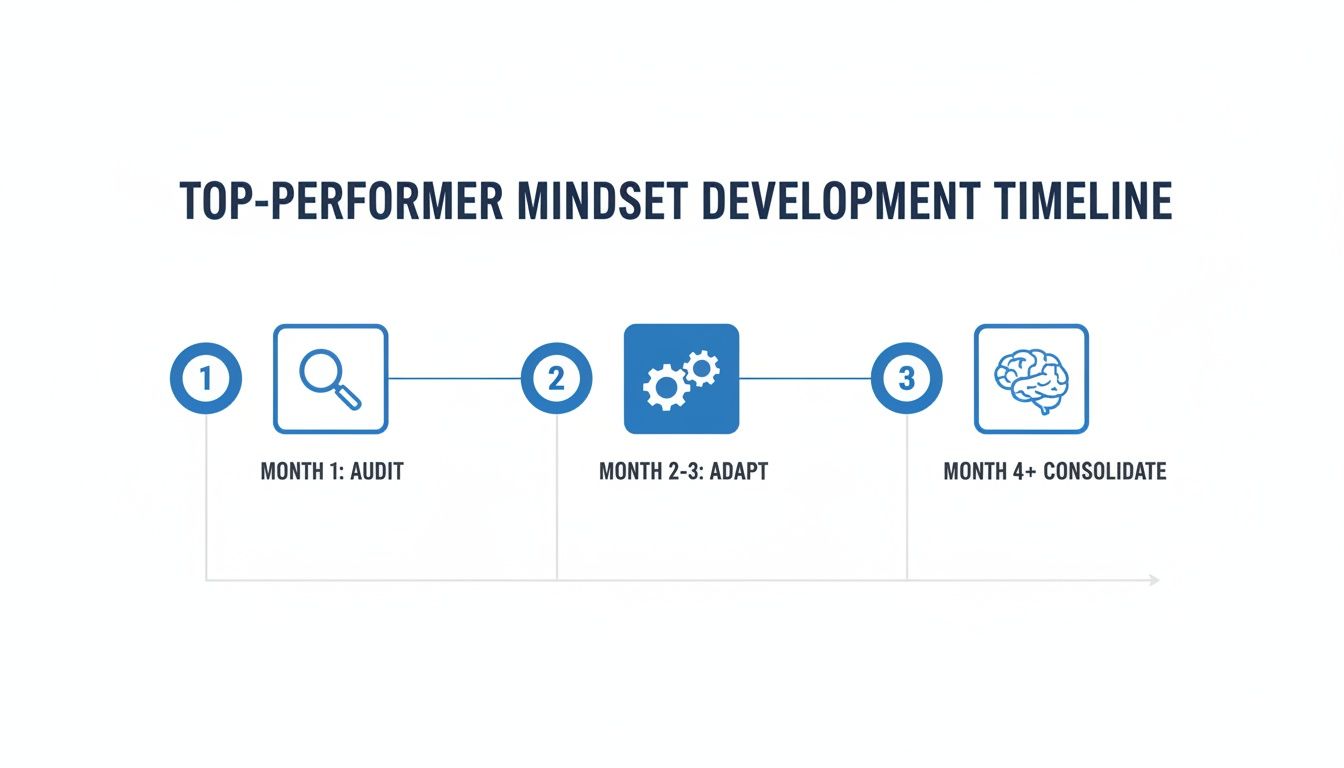
Esta línea de tiempo muestra el marco mental requerido para apegarte a un plan así. Se trata de auditar lo que haces ahora, adaptar tu estrategia según lo que funciona y luego consolidar esos hábitos efectivos.
Construir una mentalidad de alto rendimiento no es cosa de una sola vez; es un ciclo constante de autoevaluación, ajuste y refuerzo.
Horario del sábado
Mañana (9 AM - 12 PM): Revisa todo el material de la semana. Tu misión es encontrar y crear conexiones entre temas aparentemente separados.
Tarde (1 PM - 4 PM): Haz un examen práctico completo o un bloque grande de preguntas mixtas del banco. Esto ayuda a simular condiciones reales y a construir resistencia.
Noche: disponible sin costo adicional. Sin excepciones.
Horario del domingo
Mañana: Atiende tu administración personal — compras, lavandería, preparación de comidas para la semana.
Tarde (4 PM - 6 PM): Sesión ligera de repaso en Anki y una rápida lectura de los temas para la próxima semana. Esto prepara tu cerebro y hace que el lunes sea menos impactante.
Noche: Relájate y recarga energías para la semana siguiente.
Esta estructura es un marco sólido, no una prisión rígida. Debes ajustarla para adaptarla a tus niveles de energía y demandas específicas del bloque actual. Pero los principios básicos — repaso consistente diario, práctica activa y descanso protegido — siempre deben permanecer iguales.
Si usas Obsidian para aprender, HoverNotes guarda las notas de clase directamente en tu bóveda. La función de captura con marca de tiempo ahorra horas de volver a ver videos. Puedes probar HoverNotes gratis—tienes 20 minutos de créditos de IA sin tarjeta de crédito, suficiente para procesar una conferencia completa de una hora. Consulta las opciones actuales en la página de precios HoverNotes.
#Mantén las afirmaciones sobre el aprendizaje en proporción con la evidencia
La práctica de recuperación y el espaciado cuentan con una amplia base de evidencia, pero los resultados dependen de la materia, el estudiante y la evaluación. Una revisión sistemática de 2023 sobre educación en radiología encontró relativamente pocos ensayos elegibles y una cobertura desigual del espaciado, la intercalación y la práctica de recuperación, aunque la mayoría de los estudios incluidos informó una ventaja en al menos una evaluación inmediata o diferida. La conclusión práctica es usar el recuerdo basado en preguntas y la revisión diferida, y luego medir el rendimiento con preguntas específicas del curso y casos clínicos. No interpretes una técnica de estudio —ni una herramienta de apuntes con IA— como sustituto de la orientación del profesorado, bancos de preguntas validados, práctica supervisada o protocolos de seguridad del paciente.
Aprende a estudiar de manera efectiva para los exámenes con métodos respaldados por la ciencia. Convierte las conferencias en video pasivas en herramientas de estudio poderosas para mejorar la memoria y la retención.
Aprende a crear una guía de estudio a partir de conferencias en video usando flujos de trabajo de IA, plantillas Markdown y capturas visuales para mejorar la retención y optimizar el estudio.
Toma notas magistrales de las clases en video con un sistema práctico para capturar ideas clave rápidamente en Canvas, Blackboard o cualquier portal universitario.