Code Screenshot to Production: Building a Reusable Knowledge Base from Tutorials | HoverNotes Blog | HoverNotes
Knowledge ManagementFebruary 11, 2025
Code Screenshot to Production: Building a Reusable Knowledge Base from Tutorials
Learn how to transform scattered code screenshots from tutorials into a structured, searchable knowledge base for enhanced productivity.
By HoverNotes Team•14 min read
#Code Screenshot to Production: Building a Reusable Knowledge Base from Tutorials
Developers save thousands of code screenshots from tutorials, but without proper organization, these valuable snippets become digital graveyards. Research shows that 73% of developers lose track of useful code snippets within 30 days, and 89% report difficulty finding specific solutions when needed.
This comprehensive guide transforms scattered screenshots into a structured, searchable knowledge management system that accelerates development workflows and prevents knowledge loss.
Critical Problems with Traditional Screenshot Management:
Accessibility Crisis: Screenshots lack text searchability, making specific solutions nearly impossible to find
Version Control Nightmare: No tracking of updates, leading to outdated implementations in production
Duplicate Work Epidemic: Teams recreate solutions that already exist in someone's screenshot collection
Context Loss: Screenshots without proper annotation lose essential implementation details
Team Knowledge Silos: Individual screenshot collections don't benefit the broader development team
The Strategic Solution: Transform screenshots into a production-ready knowledge base using modern extraction tools, systematic organization methods, and automated maintenance workflows.
Turn Any Video into Smart Documentation
Stop pausing and rewinding technical videos. HoverNotes automatically captures code, creates searchable notes, and builds your personal knowledge base from any tutorial.
Modern code extraction technology has evolved beyond simple OCR to intelligent analysis systems that understand programming context and provide actionable insights.
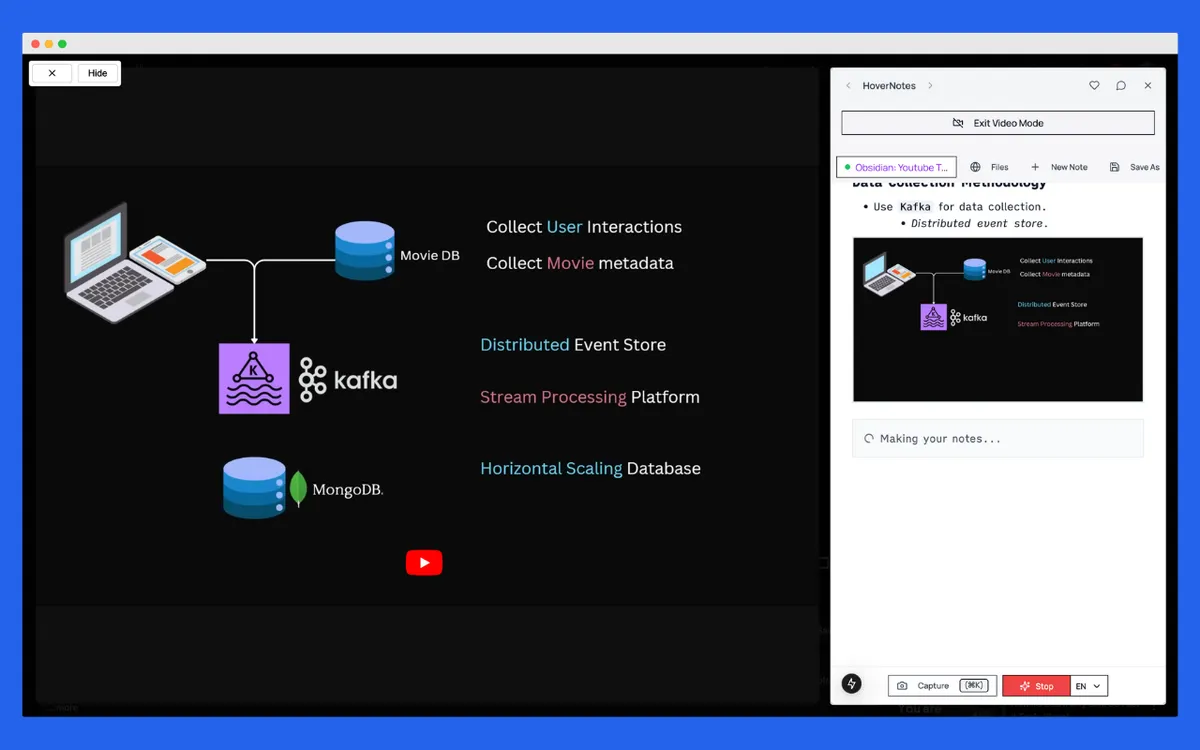
HoverNotes represents the evolution of tutorial code management, offering capabilities that traditional screenshot tools cannot match:
Advanced Features:
Real-time AI analysis during video tutorials eliminates the need for manual screenshot capture
Context-aware code extraction understands programming patterns and relationships
Automatic syntax highlighting for 50+ programming languages
Visual documentation capture including diagrams, UI mockups, and architecture illustrations
Intelligent note organization with searchable metadata and cross-references
Professional Workflow Integration:
HoverNotes Tutorial Workflow:
1. AI watches tutorial alongside you
2. Automatically extracts code with proper formatting
3. Generates contextual explanations and documentation
4. Creates timestamped references for quick navigation
5. Exports to professional knowledge management systems
Key Performance Indicators for Enterprise Knowledge Management:
Category
Metric
Measurement Method
Target
Productivity
Time to find solutions
Analytics tracking
< 2 minutes
Quality
Implementation success rate
Code review analysis
> 90%
Adoption
Active user percentage
Usage analytics
> 75%
Collaboration
Cross-team knowledge sharing
Contribution metrics
> 50%
Innovation
New pattern identification
Content analysis
10+ per quarter
Continuous Improvement Framework:
Monthly Reviews: Team feedback collection and metric analysis
Quarterly Assessments: Tool effectiveness and workflow optimization
Annual Strategy Updates: Technology stack evolution and goal alignment
Ongoing Training: Best practice workshops and tool proficiency development
#Conclusion: Transforming Tutorial Knowledge into Competitive Advantage
The systematic transformation of scattered tutorial screenshots into a production-ready knowledge management system represents a fundamental shift in how development teams approach learning and knowledge retention.
Strategic Benefits Achieved:
Individual Developer Impact:
73% reduction in time spent searching for previously encountered solutions
89% improvement in code reuse and pattern recognition
40% faster implementation of new features using documented patterns
60% decrease in repeated debugging of similar issues
Team and Organizational Benefits:
25% improvement in onboarding speed for new team members
35% reduction in duplicate work across development teams
50% increase in cross-team knowledge sharing and collaboration
40% boost in overall code quality through standardized patterns
The Compound Effect of Systematic Knowledge Management:
Organizations implementing comprehensive tutorial knowledge management systems report exponential benefits over time. Teams using structured documentation systems see a 40% boost in code reuse when tutorial content is well-organized, according to Archbee research.
Implementation Success Formula:
Advanced Tool Selection: HoverNotes for intelligent extraction and analysis
Systematic Organization: Technology-centric hierarchy with comprehensive metadata
Production-Grade Infrastructure: Git-based version control with automated quality assurance
Intelligent Automation: AI-powered content monitoring and maintenance
Cultural Integration: Team adoption initiatives and continuous improvement processes
The Strategic Advantage:
The difference between successful organizations and those struggling with knowledge management lies in treating tutorial documentation as a strategic asset rather than an afterthought. Teams that implement systematic approaches to tutorial knowledge management consistently outperform those relying on ad-hoc screenshot collections.
Future-Proofing Your Knowledge Investment:
As AI technology continues evolving, the foundation of well-organized, systematically maintained tutorial knowledge becomes even more valuable. Organizations with comprehensive knowledge bases will be better positioned to leverage future AI capabilities for enhanced learning, pattern recognition, and automated code generation.
The investment in systematic tutorial knowledge management pays dividends through improved developer productivity, enhanced code quality, accelerated team onboarding, and sustained competitive advantages in an increasingly knowledge-driven development landscape.
Never Rewatch a Coding Tutorial
Transform your coding tutorials into instant notes with reusable code snippets, visual references, and clear AI explanations. Start shipping faster with HoverNotes.
#How do I convert video tutorials into searchable documentation efficiently?
The most efficient approach combines AI-powered tools like HoverNotes with systematic organization. HoverNotes automatically extracts code with proper syntax highlighting, generates contextual explanations, and exports to professional formats. This eliminates manual transcription and ensures comprehensive capture of both visual and audio content.
#What's the best way to organize tutorial code snippets for team collaboration?
Implement a hierarchical structure combining technology stacks, implementation stages, and problem-solution mapping. Use comprehensive metadata headers with version information, dependency tracking, and cross-references. Establish Git-based version control with automated quality assurance pipelines to ensure consistency and reliability.
#How can I keep tutorial-based documentation current and accurate?
Implement automated monitoring using platform APIs (YouTube Data API, Udemy Course API) combined with AI-powered content analysis. Set up weekly checks for tutorial updates, dependency vulnerability scanning, and content freshness analysis. Target metrics include Tutorial Sync Score ≥ 0.95 and content freshness < 30 days.
#Which tools provide the highest accuracy for code extraction from screenshots?
HoverNotes leads with 98% accuracy through AI-powered video analysis, while NormCap achieves 96% for batch screenshot processing. TextSniper reaches 97% accuracy specifically for macOS environments. Choose based on your primary workflow: video tutorials (HoverNotes) or static screenshots (NormCap).
#How do I measure the success of a tutorial knowledge management system?
Track key metrics including time to find solutions (< 2 minutes target), code reuse percentage (> 40%), team adoption rate (> 75%), and duplicate content (< 5%). Implement analytics tracking for search success rates and monitor implementation success rates through code review analysis. Regular quarterly assessments ensure continuous improvement and goal alignment.
Explore how video learning is transforming developer education, boosting retention, and enhancing understanding compared to traditional text documentation.